Hot Keywords:
- All
- Product Name
- Product Keyword
- Product Model
- Product Summary
- Product Description
- Multi Field Search

Views: 0 Author: Welldone power Publish Time: 2026-10-15 Origin: Site


Regulation (EU) 548/2014 is the ecodesign implementing measure for power transformers, issued under the Ecodesign Framework Directive 2009/125/EC. Its only job is to set mandatory minimum energy performance for transformers placed on the EU market or put into service. Unlike household appliances, power transformers carry no energy label — there is no colourful sticker at the point of sale. What they face instead is a hard floor: if a unit's losses or efficiency index sit outside the prescribed limits, it cannot be placed on the market, full stop. For an exporter, that makes the regulation the first gate, ahead of price, delivery, or even IEC type tests.
The scope is narrower than the word "transformer" suggests, and the boundaries matter:
Minimum rated power of 1 kVA. Below that, the measure does not apply.
Intended for use in 50 Hz electricity transmission and distribution networks, or for industrial applications.
Covers both single-phase and three-phase units, liquid-immersed and dry-type.
One timing detail trips up procurement teams: the measure applies to transformers placed on the market or put into service after its entry into force. A unit ordered and contractually fixed before that point may sit outside the requirement, but a loose letter of intent to "maybe buy non-compliant units later" carries no protection. If the contract does not pin down quantities and a clear cut-off date, the exemption evaporates.
Almost the entire regulation turns on four defined quantities:
Rated power (Sr) — the apparent power the unit is built to transfer.
No-load loss (P0) — the active power the core dissipates when excited at rated voltage with the secondary open. It runs whenever the transformer is energized, around the clock.
Load loss (Pk) — the loss under rated current, dominated by I²R in windings and stray-field losses.
Peak Efficiency Index (PEI) — the highest efficiency the unit reaches across its load range, used for large units.
A definition that bites in testing: load loss must be corrected to a reference temperature (per IEC 60076-1 / EN 60076-1) before it is compared against the tables. A manufacturer who measures Pk at a different temperature and forgets the correction will either over-claim or, worse, fail the limit at type test.
This is the article that sets the actual limits, and it splits transformers into two camps.
Medium power (roughly 1 kVA up to 3 150 kVA). The regulation caps the maximum allowable no-load loss (P0) and maximum allowable load loss (Pk) using tables I.1 through I.6 in Annex I, indexed by rated power and by cooling medium (oil versus dry-type). Pole-mounted liquid units follow their own Table I.6. Because real networks use odd voltage combinations, the tables carry correction factors: a 36 kV winding, a dual-voltage winding, or a voltage-regulating distribution transformer (VRDT) each shifts the permissible loss upward by a stated percentage. The limits arrive in two waves:
Tier 1 — from 1 July 2015.
Tier 2 — from 1 July 2021, roughly 20% tighter on no-load loss for most medium-power classes. Tier 2 is the bar a new EU-bound transformer must clear today. Hitting Tier 2 no-load in most classes is not achievable by tighter assembly alone — it typically forces a step up in core material grade (domain-refined high-permeability grain-oriented steel) or, in some ratings, an amorphous-metal core, because the permitted P0 simply leaves no room for ordinary material losses.
Larger units (> 3 150 kVA up to 40 MVA) and large power transformers. Absolute loss ceilings become awkward at this scale because losses grow with rating. So the regulation switches to a minimum Peak Efficiency Index (PEI) in tables I.7 to I.9. PEI is defined by:
PEI = 1 − 2·(P0 + Pc0) / [ Sr · √( (P0 + Pc0) / Pk ) ]
where Pc0 is the no-load power of the cooling system. PEI captures the same physics as the loss tables — it implicitly caps the weighted sum of no-load and load loss — but normalizes it to rated power, so a 100 MVA unit and a 10 MVA unit are judged on the same percentage scale. The weighting reflects loss capitalisation: no-load loss is "on" for ~8 760 hours a year, load loss only during loading, so the two are not worth the same and the index balances them.
The disproportionate-cost fallback. If replacing an existing transformer with a Tier 2-compliant unit would cost more (in transportation or installation) than the net present value of the energy it would save over its life, the regulation allows — exceptionally — a Tier 1 unit instead, or even no minimum requirement where Tier 1 is also disproportionate. The catch: the manufacturer or importer must document the justification and notify the national market-surveillance authority. This is a paper trail, not a silent exemption.
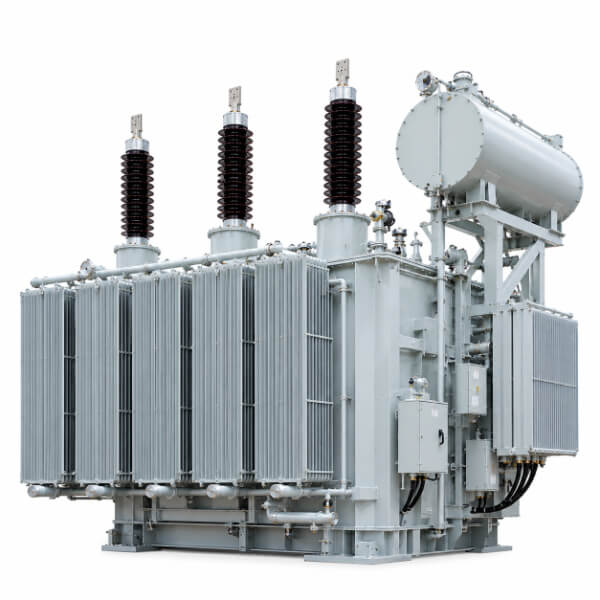
Before designing to any loss table, confirm the unit is in scope. The regulation exempts transformers "specifically designed" for:
Instrument (measuring) duty.
Supplying DC to electronic or rectifier loads — but not transformers that deliver AC from DC sources such as wind-turbine or photovoltaic interfaces, which remain in scope.
Furnace duty, offshore platforms, offshore wind, and shipboard service.
Temporary or emergency supply during a fault or refurbishment (not permanent uprates).
Railway traction (AC/DC contact-line) duty and rolling-stock traction transformers.
Earthing/grounding, motor-starting, testing, and welding duty.
Explosion-proof and underground-mining duty.
Deep-water (submerged) duty, and MV-to-MV interface units ≤ 5 MVA built to ride emergency overloads.
Three-phase medium-power units below 5 kVA (partial — some Annex I points still apply).
A trap worth naming: a wind or solar inverter transformer that steps AC up from a DC-linked converter is not exempt, even though it sits inside a "renewable" project. Treating it as exempt is a frequent, expensive mistake at customs. Separately, if an existing medium or large transformer later has its core or complete windings replaced, it must be reassessed for conformity and brought into compliance.
Compliance is demonstrated through the conformity route set by the Framework Directive: either an internal design control system (Annex IV) or a management system (Annex V). In practice the manufacturer assembles a technical file — design calculations, the loss measurements, the PEI where applicable — and issues an EC Declaration of Conformity, then affixes the CE marking. The CE mark is the visible market gate; without it, borders and distributors close.
The regulation demands that the manufacturer make the losses visible. The declared package must include rated power, no-load loss, load loss (corrected to reference temperature), the PEI where relevant, and the weights of the main components. This is the data a procurement engineer checks against Annex I. A transformer whose declared P0 and Pk cannot be reconciled with the tables — or with the type-test report — is a non-starter, regardless of how good the rest of the bid looks.
Annex IV lists the loss levels of the best-performing transformers technically achievable at the time — a benchmark of "best available technology." These are indicative, not mandatory: no unit is forced to hit them. But they are the clearest signal of where the next tier is heading, and they belong in any road-map discussion with R&D.
The Commission committed to review the measure by 1 July 2023, examining whether Tier 2 proved cost-effective, whether a stricter Tier 3 is warranted, whether PEI should extend to medium-power units, and whether the offshore and pole-mounted concessions should stand. Tighter limits have been under discussion. A manufacturer designing only to today's Tier 2 with zero margin may find the goalposts move inside the product's sales lifetime.
A short but serious clause: a manufacturer, importer, or representative shall not place on the market a product engineered to detect that it is being tested and alter its performance to post a better number. The anti-cheat rule is explicit, and it reaches the technical file as much as the hardware.
The measure entered into force shortly after its 2014 publication, with Tier 1 applying from 1 July 2015 and Tier 2 from 1 July 2021. Regulation (EU) 2019/1783, adopted in November 2019, amended it to introduce targeted concessions for the Tier 2 stage and to clarify several provisions. The two numbers are read together.
Dimension | Medium power (≤ 3 150 kVA) | Large / > 3 150 kVA |
Limit form | Max P0 and Pk (Annex I tables) | Min PEI (Annex I tables) |
Tier 1 | From 1 July 2015 | From 1 July 2015 |
Tier 2 | From 1 July 2021 (~20% tighter P0) | From 1 July 2021 |
Voltage corrections | Yes (36 kV, dual-voltage, VRDT) | PEI scales with Sr |
What you declare | P0, Pk, weights | P0, Pk, PEI, weights |
Confirm scope and exemption first. Read Annex II before touching the design. A wind/PV AC interface unit is in scope; a furnace transformer is not.
Fix the right design target. Medium units chase the P0/Pk table for their rating and cooling type; large units chase a minimum PEI. Pick the table that matches voltage class and correction factors.
Design with margin to Tier 2, not to Tier 1. Core material grade (high-permeability GOES or amorphous metal), stacking quality, and winding geometry decide whether you clear Tier 2 with breathing room — and survive the next review.
Measure and declare losses per Annex III, with Pk corrected to reference temperature. Mismatched declarations are the most common reason bids get rejected.
Run the conformity assessment, issue the EC Declaration of Conformity, and affix CE. No CE mark, no EU market.
Keep the technical file current and watch the review horizon. Document any disproportionate-cost case and notify the authority; track Tier 3 discussions so today's compliant design is not tomorrow's obsolete one.
Q: Is the transformer ecodesign regulation (EU) 2019/1781 or 548/2014?A: It is (EU) 548/2014, amended by (EU) 2019/1783. (EU) 2019/1781 is a different measure covering electric motors and variable speed drives. The two numbers are easy to conflate in procurement paperwork.
Q: What is the difference between Tier 1 and Tier 2 for transformers?A: Tier 1 applied from 1 July 2015 and Tier 2 from 1 July 2021. Tier 2 tightens the no-load loss limit by roughly 20% for most medium-power classes, so any transformer placed on the EU market today must meet Tier 2.
Q: Do wind and solar transformers need to comply?A: Yes, if they supply AC from a DC-linked converter (typical inverter interfaces). The exemption for "DC supply to rectifier loads" does not cover them. Only transformers specifically designed for excluded duties — furnace, offshore, traction, welding, and similar — are out of scope.
Q: What losses must a manufacturer declare?A: Rated power, no-load loss (P0), load loss (Pk corrected to reference temperature per IEC/EN 60076-1), the Peak Efficiency Index where applicable, and the weights of the main components, per Annex III.
Q: Can an old transformer be exempted from Tier 2 when replaced?A: Only in a documented disproportionate-cost case: if installing a Tier 2 unit costs more than the lifetime value of the energy saved, a Tier 1 unit may be allowed, and the manufacturer must notify the market-surveillance authority with justification. It is not automatic.
EU transformer compliance is a design discipline, not a stamp. It starts with scope and exemptions, runs through loss limits or a minimum PEI set by (EU) 548/2014 as amended by 2019/1783, and ends with a declared loss value, a CE mark, and a defensible technical file. Get the target wrong and the unit never clears the border; get it right with margin and it stays compliant through the next review.


