Hot Keywords:
- All
- Product Name
- Product Keyword
- Product Model
- Product Summary
- Product Description
- Multi Field Search

Views: 0 Author: Welldone power Publish Time: 2026-09-23 Origin: Site


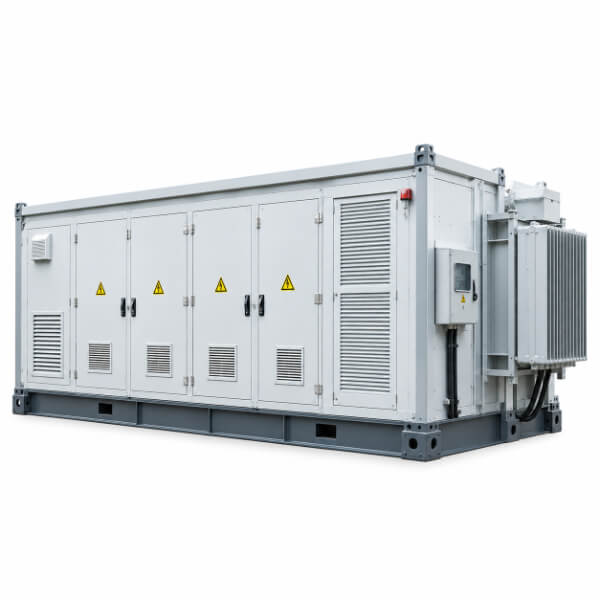
There is a particular kind of box that only becomes interesting after something has gone wrong — or before anything has been built. When a flood takes out a substation at 2 a.m., or a mine opens four hundred kilometers from the nearest grid, power cannot wait for a concrete building with a control house and a procession of trades. The compact prefabricated substation — a transformer, switchgear, protection, and controls assembled and tested as one unit in a factory, then shipped — is the standard answer to both situations.
The phrase attached to it almost everywhere is "plug-and-play." It is a comforting phrase and, used loosely, a misleading one. A substation is not a laptop. It interfaces with a live network that can kill equipment and people if the assumptions are wrong. This article treats "plug-and-play" as an engineering specification rather than a sales slogan: what a compact prefabricated substation must actually pre-solve before it leaves the factory, so that the work remaining on site is connection and confirmation rather than discovery and rework.
The label "compact prefabricated substation" covers two deployments that are often confused and should not be.
The mobile, trailer- or skid-mounted unit exists for emergency restoration. It is a contingency asset: redeployable, road-transportable, and required to operate correctly at a host site it has never seen, against a network it was not built for. Its value is measured in hours saved during an outage.
The containerized E-house or skid-mounted prefabricated substation exists for remote permanent or semi-permanent sites — a mine, a well pad, an islanded community, a construction camp. It may stand for years. It is still "prefabricated," but its mission is continuity, not redeployment.
Both share the same core thesis — move the work from a weather-exposed construction site into a controlled factory — but they differ sharply in transport envelope, deployment model, and the kind of pre-engineering that makes them trustworthy. The five questions below apply to both, and the answers are where most "plug-and-play" claims are won or lost.
A real plug-and-play unit arrives with its high-voltage and low-voltage interfaces already defined to a standard the host site can actually meet. For mobile units this means pre-fitted cable termination compartments, and in the most capable designs, plug-in gas-insulated bushings, so the only field work is landing the cables and torquing the connections. For containerized E-houses it means pre-punched, sealed conduit entries and a single, documented point of connection per side.
The trap is simple: if the interface geometry is not specified up front, "plug-and-play" quietly becomes "cut a hole and hope." A mobile unit arriving at a storm-damaged site cannot wait for a custom cable termination to be fabricated. The specification must state, in numbers, the cable cross-sections, the termination type, the entry side, and whether plug-in bushings are required. A unit that meets the spec connects in an afternoon; a unit that does not becomes a welding project on a flooded street.
The single largest time sink in traditional substation commissioning is not the iron — it is the logic. Relay settings, SCADA mapping, interlocking sequences, and protection coordination are where months hide. A genuine prefabricated substation leaves the factory with these already loaded and factory-acceptance-tested against a simulated site network: the protection relays carry the intended settings, the automation maps to the utility's protocol (whether IEC 60870-5-104, DNP3, or Modbus), and the interlocking sequences are verified before the enclosure is sealed.
On arrival, the work is confirmation, not creation. That difference is the difference between "energize tomorrow" and "we need three weeks and a protection engineer."
The risk most often missed is specific to mobile, redeployable units. A mobile substation is reconnected to a different host network every time it is moved. Its protection therefore cannot be a one-off setup — it has to be reconfigurable in the field without a laptop marathon. That means a stored parameter library and a documented switching procedure, not a bespoke commissioning each deployment. A factory that ships a unit "pre-set for site A" has not built a mobile substation; it has built a fixed one that happens to be on wheels.
"Plug-and-play" dies on a road it cannot fit on. Mobile substations must respect highway weight and dimension limits — bridge ratings, overhead clearances, cornering — which is precisely why the most transportable units are built as single-phase lightweight assemblies using high-temperature insulation systems and ester-based fluids to cut mass, rather than as a single heavy three-phase block. The site itself needs only a pad, not a building, but that pad must be engineered for the unit's footprint and center of gravity, and for stabilization if the unit remains trailer-mounted.
For remote E-houses the constraint shifts. The question is rarely road legality and almost always "can it be placed by the crane that exists on site — or by no crane at all?" Skid-mounted units that need only a flat, graded pad beat trailer units decisively when the site has no road and no crane. Specifying the wrong transport form for the terrain turns a two-day deployment into a logistics epic. The envelope — weight, dimensions, lifting points, foundation type — belongs in the purchase specification, not in the installer's improvisation.
An emergency unit may sit in a flooded coastal town with salt spray and no shelter. A remote unit may sit at altitude in a dust storm, or in a desert with a 50 °C day-night swing. These are not accessories to be bolted on after delivery; they are design inputs.
Corrosion classification (coastal sites demand the highest marine class), a sealed transformer that never breathes moist air, HVAC with redundancy, ingress-protected compartments, and seismic restraint for both transport and operation all have to exist in the base design. A unit that was "plug-and-play" in a temperate factory becomes a maintenance liability in a salt-spray disaster zone if the environmental envelope was left vague. The honest specification names the deployment climate and refuses delivery against a generic "outdoor" rating.
Even the best prefabricated substation cannot skip certain site work, and pretending otherwise is the one lie that ruins the category. The unit still requires:
Grounding to the host earth grid, following temporary grounding practice for mobile connections;
Insulation resistance and ratio verification on arrival;
Relay pickup coordination with the upstream network it is about to join.
The decisive advantage is not that this work disappears — it is that a pre-tested unit collapses it from months of construction into a day of verification. The spec-writer who budgets for this site work, and demands the factory deliver the test records that make it confirmation rather than discovery, gets plug-and-play. The one who assumes "plug-and-play means zero site work" gets a surprise.
Engineering question | Mobile / trailer unit (emergency) | Containerized E-house (remote) |
Primary mission | Restore service fast, redeploy often | Provide power where no grid reaches, for years |
"Plug" form | Plug-in bushings, cable compartments, road-legal | Sealed conduit entries, single connection point per side |
Protection | Reconfigurable parameter library for new host each time | Loaded once for the permanent site |
Transport limit | Highway weight, bridge, clearance | Crane availability, pad only |
Environment | Built for the worst site it may face | Built for the one site it will live in |
Site work left | Ground, test, coordinate, redeploy | Ground, test, commission, monitor |
Both are "compact prefabricated substations." The engineering that makes each trustworthy is entirely different, and a specification that treats them as interchangeable will fail one of them.
A procurement specification for an emergency or remote plug-and-play substation should ask for evidence, not adjectives:
Interface standard in numbers — cable cross-sections, termination type, entry geometry, plug-in bushings required or not.
Protection pre-load evidence — factory acceptance test report run against a simulated host network, the relay setting file, and the SCADA protocol mapping.
Transport and site envelope — road-legal weight and dimensions (mobile) or crane requirement and foundation type (remote), with lifting points documented.
Environmental class — corrosion classification, ingress protection, HVAC redundancy, seismic restraint, and the operating temperature and altitude range.
Reconfigurability for redeployment — a stored parameter library and a documented switching procedure, required only for mobile units but non-negotiable there.
Factory test package shipped with the unit — routine and acceptance test records, so on-site work is confirmation, not discovery.
Six lines of evidence do more to separate a genuine plug-and-play substation from a conventional unit with wheels than any amount of brochure vocabulary.
"Plug-and-play" is not a feature a substation has; it is a contract the factory signs on behalf of the site crew who will never have seen the unit before. The compact prefabricated substation earns the phrase only when its interfaces, its protection, its transport envelope, its environmental class, and its test records are all resolved before it ships — leaving the field crew with connection and confirmation, not invention. Specified that way, the box that shows up after the disaster, or before the road ends, actually does what the slogan promised.


