Hot Keywords:
- All
- Product Name
- Product Keyword
- Product Model
- Product Summary
- Product Description
- Multi Field Search

Views: 0 Author: Welldone power Publish Time: 2026-04-02 Origin: Site


The hum of a transformer is something most people never think about—until it stops. And when that happens at sea, two thousand nautical miles from the nearest port, the silence is deafening.
For decades, shipbuilders and vessel operators have treated marine transformers as commodities. A transformer is a transformer, right? Step the voltage up or down, slap some weatherproofing on it, and call it a day. But the ocean doesn‘t negotiate. The combination of salt-laden air, continuous vibration, extreme temperature swings, and the occasional rogue wave creates an operating environment that would destroy a standard industrial transformer in months.
Here’s what the market data actually says—and why the rules of the game are changing faster than most operators realize.
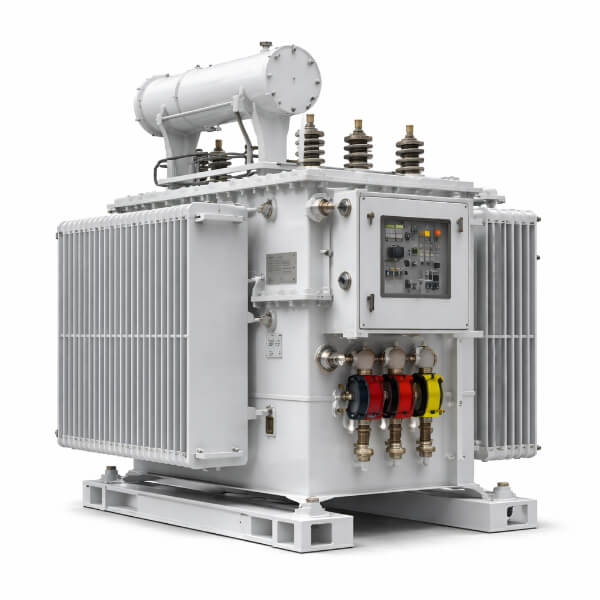
Let‘s start with the numbers, because they tell a compelling story. The global marine transformer market was valued at approximately $2.5 billion in 2023 and is projected to reach $4.1 billion by 2032, representing a compound annual growth rate of 5.5%. But that headline figure only captures part of the picture.
Breaking it down further, 2024 saw the global market reach roughly $4.2 billion, with projections suggesting a climb to $5.6 billion by 2030 at a 5.8% CAGR. Meanwhile, the shore-to-ship power supply market—a closely related segment that’s driving transformer demand in ports worldwide—stood at $2.29 billion in 2025 and is expected to hit $4.41 billion by 2035, growing at 6.78% annually.
What‘s driving this growth? Three forces, mostly.
First, global shipbuilding activity remains robust, particularly across Asia Pacific where China, South Korea, and Japan continue to dominate new vessel construction. Second, the push for energy efficiency and emissions reduction under IMO regulations means older vessels are being retrofitted with modern power distribution systems rather than scrapped outright. Third, and perhaps most significantly, the rapid expansion of offshore wind and other marine renewable energy projects has created an entirely new demand channel for specialized transformers designed for floating platforms and subsea installations.
Here’s where things get interesting—and where most procurement teams get it wrong.
A marine transformer isn‘t just a dry-type transformer that happens to be installed on a boat. The technical requirements are fundamentally different. Shipboard transformers must handle AC high-voltage systems typically ranging from 3kV to 15kV, accommodate both 50Hz and 60Hz frequencies depending on the vessel’s operating region, and maintain performance through continuous listing and dynamic tilting that would trip a land-based unit‘s protective systems.
Cooling is another battle entirely. On land, you can rely on natural convection or forced air without much concern. At sea, space constraints mean transformers are often crammed into engine rooms where ambient temperatures regularly exceed 50°C, ventilation is limited, and salt particles in the air accelerate insulation degradation. The most common cooling methods in marine applications include natural cooling, forced air cooling, oil-immersed cooling, and contact forced cooling systems, each with distinct trade-offs in efficiency, maintenance requirements, and footprint.
Insulation deserves a special mention. Marine environments accelerate dielectric breakdown through a combination of high humidity, salt spray, and continuous mechanical stress. Epoxy resin-cast dry-type transformers have gained substantial ground here, offering superior moisture resistance and fire safety compared to traditional oil-immersed designs, particularly in passenger vessel applications where safety regulations are most stringent.
If you‘re sourcing transformers for international vessels—and your customer base is largely overseas—you need to know which stamps on the nameplate actually matter.
The short answer: classification society certification is non-negotiable. Major societies including ABS (American Bureau of Shipping), DNV, BV (Bureau Veritas), Lloyd’s Register, and CCS (China Classification Society) each maintain their own rules covering design, manufacturing, testing, and installation of electrical equipment onboard vessels. DNV certification, for instance, is based on internationally recognized rules that require approval of all critical electrical systems and components on classified vessels.
Beyond classification society rules, IEC standards form the technical backbone of marine transformer design. IEC 60092 series specifically addresses electrical installations in ships, while IEC 60076 covers power transformers generally. The IEC/IEEE 80005-1:2019 standard governs high-voltage shore connection systems—increasingly important as ports worldwide mandate shore power connectivity for berthed vessels.
There‘s a nuance here that often catches buyers off guard: IEC TS 60076-20, the energy efficiency standard for power transformers, explicitly excludes transformers intended for marine applications from its efficiency level requirements. That doesn’t mean efficiency doesn‘t matter at sea—it absolutely does, especially with fuel costs and emissions regulations tightening every year. It simply means the standard recognizes that marine transformers operate under conditions so different from land-based units that a separate framework is needed.
For European-bound vessels, CE certification is also mandatory, demonstrating compliance with EU health, safety, and environmental requirements.
Ask most industry analysts about marine transformer applications, and they’ll rattle off the usual categories: commercial vessels, military ships, offshore support vessels. And yes, those remain the core markets.
But two emerging segments deserve much more attention than they‘re getting.
The first is shore power. As environmental regulations tighten, ports from Rotterdam to Shanghai to Los Angeles are installing shore-side power supply systems that allow vessels to shut down their auxiliary engines while docked. Frequency converters dominate this space—accounting for roughly 39% of shore power revenue in 2025, largely because most ports operate at 50Hz while a substantial portion of the global fleet runs on 60Hz systems. The transformers integrated into these systems face unique demands: bidirectional power flow, harmonic filtering, and the ability to handle sudden load changes as vessels connect and disconnect.
The second is the electric and hybrid vessel revolution. LNG-powered ships, battery-electric ferries, and hybrid propulsion systems are no longer pilot projects—they’re entering mainstream commercial service. These vessels require transformers with different characteristics than traditional diesel-electric setups: faster response times, better harmonic management, and often higher frequency outputs to feed specialized propulsion drives. The world‘s first large-capacity battery hybrid ro-pax ferry, for example, required specially designed lightweight transformers that achieved a 15% weight reduction through optimized electromagnetic design while maintaining reliable operation in the corrosive English Channel environment.
After speaking with procurement managers at major shipyards and vessel operators across Asia, Europe, and the Middle East, a consistent pattern emerges in how they evaluate marine transformer suppliers.
Certifications open the door. If your transformers don‘t carry the relevant classification society approvals for the target market, you won’t even get a conversation. ABS, DNV, BV, and Lloyd‘s Register are the most frequently cited requirements, though specific needs vary by region and vessel type.
Customization capability closes the deal. Shipboard spaces are never standard. Engine room layouts vary, ventilation differs, and mounting constraints change from one vessel design to the next. Suppliers who can adjust terminal positions, optimize core geometry for tight spaces, and deliver transformers in non-standard voltage and frequency combinations consistently win contracts over competitors offering rigid, off-the-shelf products.
Delivery speed matters more than most suppliers admit. Shipbuilding schedules are notoriously compressed, and transformer delivery delays create cascading effects throughout the vessel completion timeline. Yards value suppliers who can deliver within standard lead times—and occasionally pull off emergency deliveries when schedules slip.
But there‘s one factor that buyers mention less often but arguably matters just as much: field support. Marine transformers don’t fail often, but when they do, the vessel is typically far from the supplier‘s service center. Remote monitoring capabilities, 24-hour technical response, and the availability of spare parts at major ports around the world separate serious suppliers from those simply chasing orders.
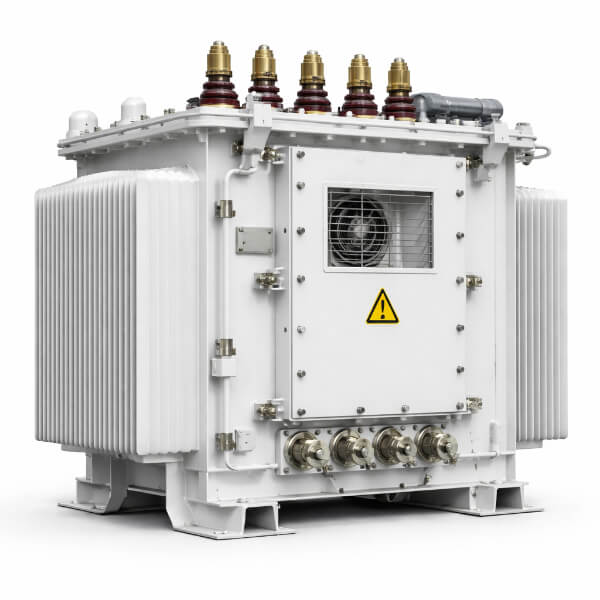
For overseas buyers accustomed to sourcing from European or North American suppliers, the rise of Chinese marine transformer manufacturers might raise eyebrows. But the data doesn’t lie.
China‘s position as the world’s largest shipbuilding nation creates natural advantages for its transformer industry. Proximity to major shipyards means shorter lead times, lower logistics costs, and the ability to collaborate closely on custom designs. Leading Chinese manufacturers now hold certifications from multiple classification societies including CCS, ABS, DNV, and BV, removing the compliance barriers that once limited their access to international markets.
The technical gap has also narrowed substantially. Top-tier Chinese manufacturers use high-grade silicon steel (30Q130 grade or equivalent) to minimize core losses, oxygen-free copper foil windings to optimize heat dissipation, and epoxy resin casting processes that meet or exceed international insulation standards. Protection ratings of IP56 or higher are standard for quality suppliers, providing effective defense against water spray, salt spray corrosion, and the general abuse of marine service.
Perhaps most importantly, Chinese manufacturers have embraced the customization that shipbuilders demand. Unlike some Western suppliers that offer limited modification options, many Chinese producers view each transformer as a unique engineering project, adjusting everything from terminal layouts to core geometries to meet specific vessel requirements.
The marine transformer market is growing, the technical requirements are becoming more demanding, and the penalties for getting the specification wrong are higher than ever. A transformer failure at sea doesn’t just mean a repair bill—it means lost operating days, potential safety incidents, and in the worst cases, regulatory consequences.
So what should you look for in a marine transformer supplier?
First, verification of classification society certifications. Not just claims—actual certificates for the specific societies relevant to your vessels‘ operating regions.
Second, demonstrated experience with your vessel type. A supplier who has delivered transformers for offshore support vessels may not be the right choice for a cruise ship or a naval auxiliary, and vice versa.
Third, transparency about lead times and testing protocols. Reliable suppliers can provide clear timelines and detailed documentation of factory acceptance testing, including the specific test standards applied.
Fourth—and this is where many buyers compromise unwisely—evidence of real-world performance. References from vessel operators who have run the supplier’s transformers for multiple years in challenging conditions are worth more than any marketing brochure.
The ocean doesn‘t care about your budget constraints or your delivery schedule. It will test every component on that vessel continuously, without mercy or exception. Make sure your transformers are ready for that test.


