Hot Keywords:
- All
- Product Name
- Product Keyword
- Product Model
- Product Summary
- Product Description
- Multi Field Search

Views: 0 Author: Welldone power Publish Time: 2026-03-27 Origin: Site


When facility managers walk through their warehouses, workshops, or factory floors, they rarely stop to look at the transformer tucked away in the electrical room. Yet this single piece of equipment determines whether production lines keep running, whether sensitive equipment stays protected, and whether energy bills spiral out of control.
We have spent years working with manufacturing facilities across the globe, and one truth remains constant: the transformer you choose—and how you deploy it—directly impacts your bottom line. But the conversation has shifted. Today’s industrial facilities face challenges that go far beyond simple voltage conversion. Let me walk you through what actually matters when powering modern warehouses and manufacturing spaces.
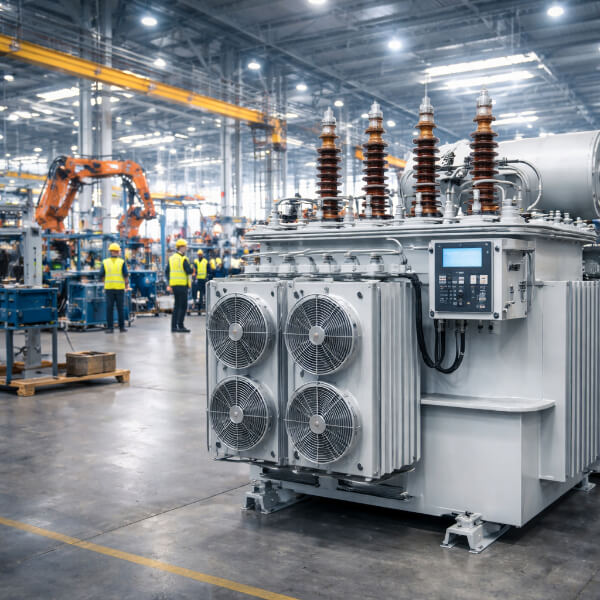
Walk into any industrial facility, and you will likely find a transformer that was selected based on one criterion: price. This approach overlooks something critical—the operating environment determines transformer lifespan more than any specification sheet.
Consider a recent automotive parts plant I visited. Their maintenance team was replacing VPI (Vacuum Pressure Impregnated) transformers every four years due to the corrosive atmosphere from cutting fluids and metal particulates. The upfront savings on each unit had vanished within the first replacement cycle .
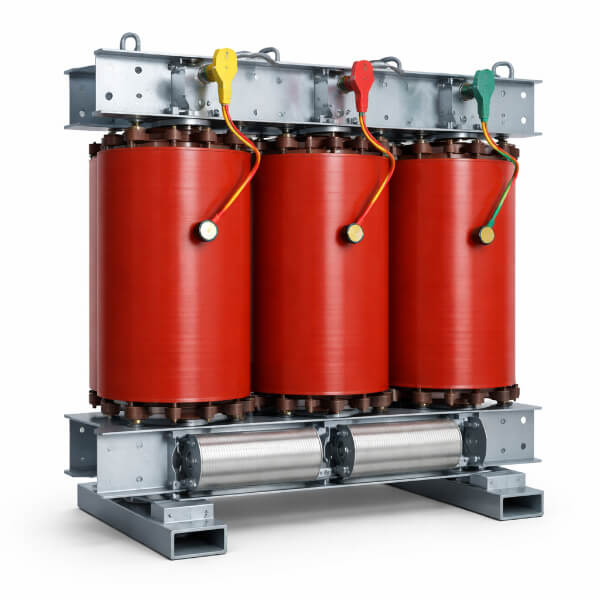
For heavy manufacturing environments—steel mills, chemical plants, foundries—cast resin transformers consistently outperform their VPI counterparts. Why? They offer superior resistance to moisture, chemicals, and extreme temperature fluctuations. In a paper mill I consulted on, cast resin units handled 30% overloads during peak production without failure, while adjacent VPI units struggled with the same demand .
But here is what many facility managers miss: the decision is not simply “cast resin versus VPI.” It is about matching the transformer to the specific load profile of your operation.
Most transformers never operate at full capacity. In fact, a factory transformer typically runs at 70% load during working hours but drops to 10% at night and on weekends. The average load factor for industrial installations hovers around 40% .
Why does this matter? Because transformer losses fall into two categories: load losses (which vary with demand) and no-load losses (which occur 24/7, regardless of whether equipment is running). A conventional 500kVA transformer in this scenario loses approximately 665W continuously, plus additional losses during operation .
Amorphous core transformers offer a compelling alternative here. Their irregular crystalline structure reduces hysteresis losses significantly. In that same 500kVA application, swapping to an amorphous core unit cuts no-load losses to 220W—an annual energy saving of over 5,000 kWh per transformer .
The payback period? Typically three to five years at current energy prices, with a 30-year lifespan yielding savings that far outweigh the modest additional upfront cost .
Steel manufacturing provides perhaps the most demanding test of transformer reliability. The process requires high currents for extreme temperatures, with frequent on-off switching for rapid cool-down. These fluctuations create voltage variations that stress electrical infrastructure to its limits .
When a transformer fails in this environment, the consequences cascade. Furnaces cool out-of-turn. Work-in-process material goes to waste. Customer orders face delays. The cost extends far beyond equipment replacement.
This is where digital monitoring transforms the equation. Modern intelligent transformers integrate IIoT-enabled sensors that provide real-time visibility into critical parameters: oil temperature, gas formation, load balance, and insulation health .
For a facility manager, this means moving from reactive maintenance to predictive operations. A CIGRE study found that transformer monitoring can reduce catastrophic failure risk by 50% . The annual cost savings from preventing just one unplanned outage typically range from $40,000 to $80,000 per transformer .
Kuwait Steel recently implemented this approach, deploying digital distribution transformers with real-time analytics capabilities. Their maintenance team now identifies failure modes between scheduled inspections, optimizes maintenance schedules based on actual condition rather than calendar dates, and gains visibility into total consumed transformer life .
Walk into any urban warehouse or high-rise manufacturing facility, and you immediately confront the space challenge. Electrical rooms shrink while power demands grow. Traditional transformer configurations simply do not fit.
Modular and vertical designs address this constraint directly. Stacked core configurations and shell-type windings pack more capacity into smaller footprints. For a recent retrofit project in a constrained urban facility, we installed amorphous core transformers that delivered 30% more power than the previous units within the exact same space .
Cooling strategy also affects spatial efficiency. Forced air cooling (AF) systems allow transformers to handle higher loads without increasing physical size, though they introduce fan maintenance considerations. The emerging alternative—ester fluid cooling—offers better thermal performance in compact packages while providing enhanced fire safety .
Fire safety regulations increasingly dictate transformer selection, particularly in multi-tenant warehouses and high-rise manufacturing facilities. Cast resin transformers offer superior fire resistance characteristics, often making them the mandated choice for buildings above certain heights or in densely populated areas .
But safety considerations extend beyond fire ratings. Indoor installations require careful attention to ventilation, clearance for heat dissipation, and accessibility for maintenance. Outdoor installations demand weather protection and UV resistance that indoor-rated units lack—a distinction that caused premature failure in a coastal facility I worked on where salt-laden air corroded standard enclosures within months .
When evaluating transformer options for your facility, work through these questions systematically:
What is the actual load profile? Gather data on peak demands, typical operating hours, and idle periods. This determines whether amorphous core technology makes financial sense.
What environmental factors will the transformer face? Consider temperature ranges, humidity, airborne contaminants, and physical vibration. Cast resin units excel in harsh environments; VPI units work well in cleaner, controlled settings .
What are the fire safety requirements? Check local building codes and insurance requirements. Indoor installations in occupied spaces often require specific fire ratings.
What monitoring capabilities are needed? For critical operations, integrated monitoring provides essential protection against unplanned outages. The cost of sensors is minimal compared to a single production stoppage .
What is the installation environment? Indoor versus outdoor, space constraints, and access for maintenance all affect the choice.
The industrial sector is moving toward greater integration between power equipment and operational technology. Smart grid compatibility, bidirectional power flow for renewable integration, and predictive analytics will become standard features rather than premium upgrades .
Facilities that adopt this technology now gain operational advantages. Real-time load monitoring enables better demand management. Predictive maintenance reduces labor costs while improving reliability. Data-driven insights support more informed decisions about capacity expansion and equipment replacement.
The transformer market offers more options than ever, but the selection framework remains straightforward: understand your environment, know your load profile, prioritize safety requirements, and consider long-term operating costs alongside initial purchase price.
For warehouses with controlled environments and predictable loads, modern VPI transformers with efficient core materials often provide the optimal balance. For heavy manufacturing facilities facing harsh conditions and variable loads, cast resin construction with smart monitoring capabilities delivers superior reliability and lower total cost of ownership .
The facilities that excel in today’s competitive environment treat power infrastructure not as a commodity purchase but as a strategic investment. The transformer that powers your operations deserves the same careful consideration as the production equipment it serves.


