Hot Keywords:
- All
- Product Name
- Product Keyword
- Product Model
- Product Summary
- Product Description
- Multi Field Search

Views: 0 Author: Welldone power Publish Time: 2026-05-28 Origin: Site


I’ve walked into too many factories and commercial buildings where the owner proudly told me, “I bought the cheapest transformer on the market.” And three years later, they’re paying way more in electricity bills and repair calls than the upfront savings ever justified.
So let me give you the straight talk: if you want a transformer that saves electricity, lasts for decades, and barely needs a service visit, you have to look past the initial price tag.
There are two main families here: oil-filled transformers (the old-school workhorses) and dry-type transformers (the cleaner, quieter cousins). Both can be smart choices. But which one is actually more cost-effective for your situation? Let me break it down the way I explain it to my consulting clients.
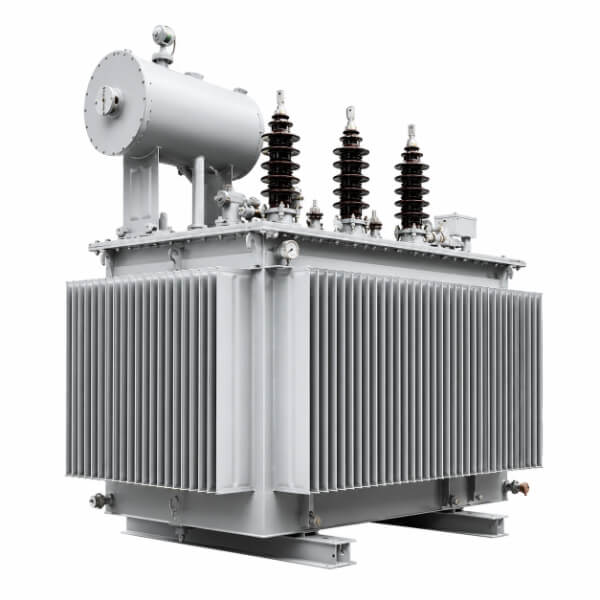
Think of oil-filled units like a diesel pickup truck. The purchase price is attractive – often 30–50% lower than a comparable dry-type model. For example, a standard S11 oil-filled unit might cost you 6,000–7,000,whileasimilar−capacitydry−typecouldrun6,000–7,000,whileasimilar−capacitydry−typecouldrun10,000 or more.
Where they shine:
Extremely tough. They handle dust, humidity, and outdoor weather without complaint.
Long life: 20–25 years is normal. Some keep chugging for 30.
Newer high-efficiency models like the S20 or SH15 amorphous metal cut no-load losses by nearly 50% compared to old S11 units.
Where they cost you later:
You can’t ignore them. Traditional oil-filled transformers need oil quality checks. Every 6–8 years, you might need an oil change or filtration. That’s not cheap.
If you buy a very cheap, low-efficiency unit (like an old S11), the electricity it wastes year after year will eat up any savings from the low purchase price.
Leak risk. If the tank ruptures, you have an environmental mess and a costly cleanup.
The good news? Fully sealed “M” series oil-filled transformers (like S11-M) are designed to be maintenance-free for their entire life. No oil changes. No regular checks. That changes the math significantly.
Best for: Outdoor installations, dusty industrial sites, places where you need brute force durability and the lowest possible upfront cost.
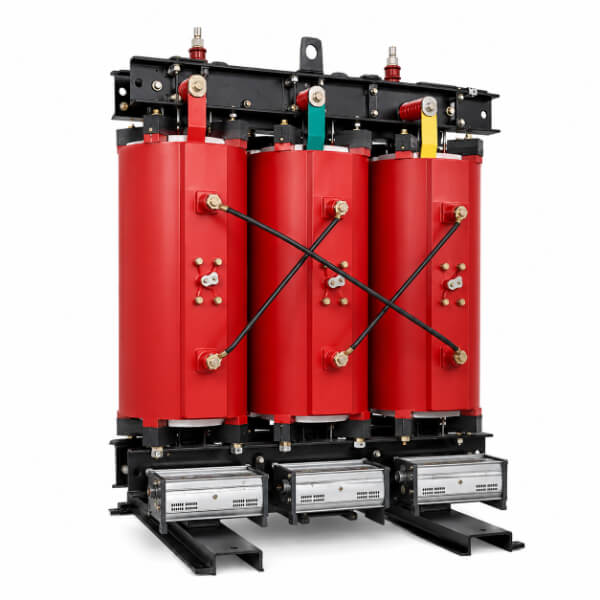
Dry-type transformers are the indoor specialists. They use air circulation (fans or natural convection) instead of oil. No fluid means no leak risk, no fire hazard, and almost zero mandatory maintenance beyond blowing dust off the coils once a year.
Why people pay more for them:
Energy efficiency is noticeably better. A modern high-efficiency dry-type, like the SCB18 (meeting top-tier energy standards), can save you $800–1,000 per year in electricity compared to an older or standard-efficiency model. I ran the numbers for a 1000kVA unit recently – the payback period for upgrading to SCB18 was just over three years. After that, pure savings.
Virtually no repair calls. No oil to degrade. No gaskets to leak. They just… run.
Safer for indoor use. You can mount them in a basement, an office building, or a hospital without special fire suppression.
A good SCB18 can last 30 years or more. That’s longer than many oil-filled units.
The trade-off:
That upfront price stings. For the same kVA rating, you might pay 30–60% more than an oil-filled counterpart.
They need clean, dry air. Put a dry-type in a wet, dusty outdoor yard, and it won’t last five years.
Best for: Commercial buildings, schools, hospitals, indoor substations – anywhere fire safety and low noise matter, and where you can keep the environment reasonably clean.
If your main goal is to slash electricity waste – especially when the transformer runs 24/7 with light loads (like a residential complex or an office tower at night) – then look at amorphous metal core transformers.
Both oil-filled and dry-type can be made with this material. The common designation is SH15 for oil-filled amorphous, and SCBH for dry-type amorphous.
What’s the real-world difference?
No-load losses drop by 60–80% compared to traditional silicon steel transformers. Let me give you a concrete example: A 1600kVA amorphous core transformer can save you over 12,000 kWh per year – that’s roughly 1,500–2,000inelectricitydependingonyourlocalrates.Overa10−yearperiod,you’relookingat1,500–2,000inelectricitydependingonyourlocalrates.Overa10−yearperiod,you’relookingat15,000–20,000 saved.
Why doesn’t everyone buy one?
The material is expensive. You’ll pay 30–50% more upfront than a traditional high-efficiency model. And amorphous cores are more sensitive to mechanical stress – they can be noisier and slightly less robust if your grid has frequent voltage spikes.
But for buildings that run lights, elevators, and HVAC systems 24/7 with long idle periods at night? The payback is usually 3 to 5 years. After that, it’s pure profit.
I’m going to give you three clear scenarios. Pick the one that matches your situation.
The transformer will be indoors, in a reasonably clean space.
You want the absolute lowest maintenance – just a yearly dusting.
Electricity is expensive in your area (above $0.12/kWh).
You plan to keep it for 10+ years. The energy savings will more than cover the higher purchase price.
The transformer is outdoors or in a harsh environment (dust, humidity, temperature swings).
You need the lowest upfront cost to fit a tight budget.
You don’t mind (or already have) the required secondary containment for oil leaks.
You want a 20–25 year lifespan with almost no internal maintenance (thanks to sealed design).
Your load profile is highly variable – lots of nighttime idle time or partial loading.
You’re building a new residential complex, office tower, or data center.
You can stomach a higher upfront investment for the best possible long-term electricity savings.
Payback periods of 3–5 years sound good to you.
I’ve seen companies buy cheap S11 oil-filled units and end up replacing them after 12 years because the internal insulation degraded and the efficiency was so poor that the utility bill was bleeding them dry. I’ve also seen companies buy premium dry-type transformers for outdoor yards – and watch them fail in 4 years because moisture got into the windings.
The most “cost-effective” transformer is the one that matches your actual operating environment and duty cycle.
Outdoors, dusty, low budget → sealed oil-filled S11-M or S20.
Indoors, clean, high electricity cost → SCB18 dry-type.
24/7 operation with long idle periods → amorphous core (SH15 or SCBH).
And one more thing: don’t ignore the installation cost. Dry-types can sometimes go closer to the load, saving you on long cable runs. Oil-filled units often need a concrete pad and an oil containment pit. That adds to your real-world cost.
There’s no single “best” transformer for everyone. But if you force me to pick the winner for combined low electricity use, long life, and almost zero repair calls – it’s the high-efficiency dry-type transformer like the SCB18. Yes, you pay more on day one. But you get it back in lower bills and no service vans showing up at 2 AM.
If your budget simply cannot stretch that far, a modern sealed oil-filled transformer (S20 or S11-M) is a very close second. It’s tough as nails, cheap to buy, and efficient enough to keep you out of trouble for 20 years.
Avoid the bargain-bin specials. Avoid old-technology units. And for heaven’s sake, don’t put a dry-type outdoors or an oil-filled inside a cramped basement without fire protection. Do that, and whichever you choose will save you money – and a lot of headaches.


