Hot Keywords:
- All
- Product Name
- Product Keyword
- Product Model
- Product Summary
- Product Description
- Multi Field Search

Views: 0 Author: Welldone Power Publish Time: 2026-05-22 Origin: Site


If you work on transmission or distribution lines, you know: insulators don't fail with a warning sign. One day they're fine. The next, you have a flashover, a dropped conductor, or a whole string lying on the ground.
Over the years, I've seen three main families of problems show up again and again – electrical, mechanical, and environmental. Each type behaves differently depending on whether you're using porcelain, glass, or composite. And yes, "composite" doesn't mean bulletproof.
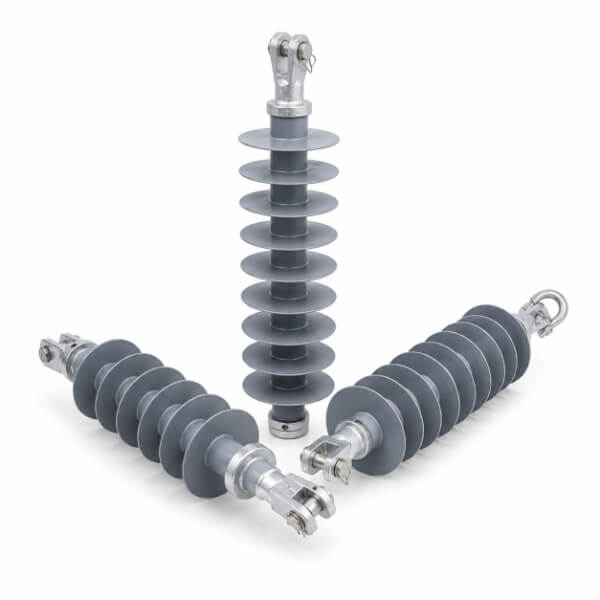
The number one culprit on energized lines? Contamination flashover – or "dirty insulator" trouble. Dust, salt, or industrial grime sits on the surface. Then fog or light rain turns that layer into a nice conductive path. Next thing you know, a bright arc jumps from the cap to the pin and the breaker opens. This single issue causes more outages than anything else.
But there are sneakier electrical failures. Take internal tracking in composite insulators. Moisture and pollution creep into the interface between the fiberglass rod and the rubber housing. You can't see it from the ground, but over weeks or months it burns a black channel right through the core. Suddenly, the insulator is just a piece of plastic holding a live wire.
With porcelain or glass, the classic headache is the zero‑ or low‑value insulator. A hidden crack, a microscopic void, or years of tiny discharges eat away the dielectric strength. The insulator still looks fine from a drone or a binocular, but its resistance has dropped to almost nothing. That means the rest of the string has to take the full voltage – and that rarely ends well.
Corona discharge is another electrical annoyance that turns into a long‑term killer. You hear that faint sizzling sound at night. It wastes energy, messes with radio signals, and slowly erodes the glaze and metal fittings. Left alone, corona paves the way for bigger arcs.
And let's not forget lightning. A direct strike is brutal. Even a nearby induced surge can puncture a weak insulator internally. The outside might show only a tiny chip, but the inside is a gone.
Electrical failure usually trips a breaker. Mechanical failure drops a wire – or an entire insulator string. That's a much worse day.
The most frightening mechanical problem is brittle fracture in composite insulators. This happens when acid – from bird droppings, industrial fallout, or even rain – seeps into the rod while it's under tension. Over time, the glass fibers break one by one, like a rope being cut from inside. The insulator snaps cleanly without stretching or bending. No warning signs. Just a loud bang and a conductor on the ground.
On porcelain or glass, cement growth failure is a slow but steady enemy. The Portland cement used to attach metal end fittings to the ceramic expands and contracts with moisture and temperature. After ten or fifteen years, micro‑cracks appear. Then the cap starts to loosen. I've seen crews lift a string and have the insulator slide right off the pin.
Then there's plain external violence: a hunter's bullet, a truck backing into a pole, a bird dropping a branch at the wrong moment, or a flying piece of debris during a storm. Broken sheds, chipped skirts, exposed rods – all of them become future failure points. And don't overlook vibration fatigue. Wind and conductor gallop slowly wear out the metal pins and the insulator's attachment points. It takes years, but eventually something gives.
Even if an insulator never sees a fault current or a sudden overload, the environment eats it alive.
For composite insulators, the biggest enemy is loss of hydrophobicity. When they're new, water beads up and rolls off. But UV light, ozone, and surface discharge slowly turn the silicone rubber into a rough, chalky layer. Rain no longer beads – it spreads into a continuous film, and that film becomes a leakage current highway. Soon you get dry‑band arcing, then erosion, then exposed rod.
Porcelain doesn't lose hydrophobicity the same way, but it develops crazing and cracking. The glaze is glass, and glass can crack. Once a crack appears, moisture gets in, freezes, expands, and makes it worse. A small chip from a rock or a bad handling job becomes a stress‑riser that spreads year after year.
Metal parts – the iron caps, steel pins, and galvanized hardware – all rust. Rust is not only weak, it's conductive. A thick layer of rust on the pin can actually shorten the creepage distance, making flashover easier. And when rust expands, it cracks porcelain or pops off glaze.
Ice and snow create their own special nightmare: flashover under icing. When freezing fog coats an insulator string, the ice bridges the gaps between sheds. When the ice starts melting, the water is often contaminated with salts from the air or the ice itself. That meltwater triggers an arc – sometimes before the line operator even knows it's icing.
Birds are another classic environmental headache. A large bird perched on the crossarm leaves a long, wet dropping that stretches across several units. That single deposit is enough to cause a flashover. Some utilities spend a fortune on bird guards and spike strips just to avoid this.
Here's the blunt truth:
Porcelain is strong and cheap, but it suffers from contamination flashover and invisible internal cracks (zero/low values).
Glass has the nice feature of "self‑breaking" when it fails – you can see it from the ground – but it still has corrosion issues and occasional random shattering.
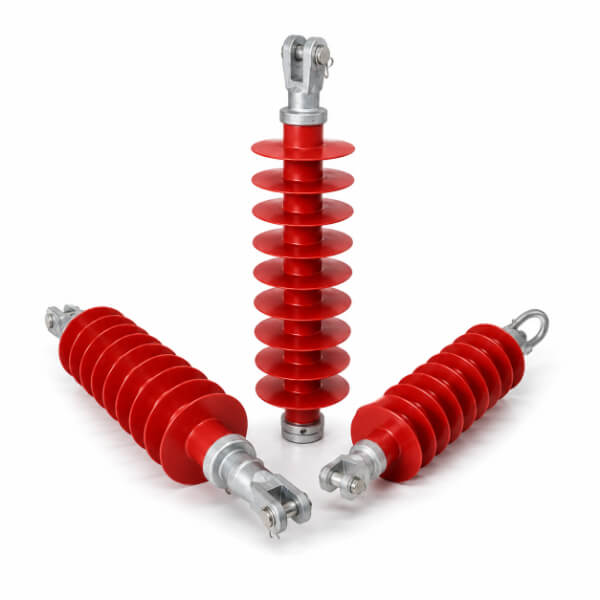
Composite handles pollution beautifully when new, but its Achilles' heel is long‑term aging, interface tracking, and that scary brittle fracture.
No type is perfect. The best strategy is knowing what to look for: routine infrared and UV inspection, regular washing in polluted areas, and replacing aged composite rods before they reach their service limit.
And always, always walk the line after a lightning storm or an ice event. The problem that will kill your reliability is the one you didn't see coming.


